



Introduction
In the world map of food safety, different countries have created their respective regulatory bodies to ensure the integrity of the food supply chains existing in respective countries. China, being recognized as one of the important players in the global food industry, has established its regulatory impetus and frameworks to further ensure that food is safe. Among the key players in this regulatory mechanism is China National Center for Risk Assessment of Food Safety. The paper is aimed at delivering maximum understanding of CFSA in China, the role it does in regulation, and the impacts it has created on the food industry; this assurance by the regulator in China is assured.
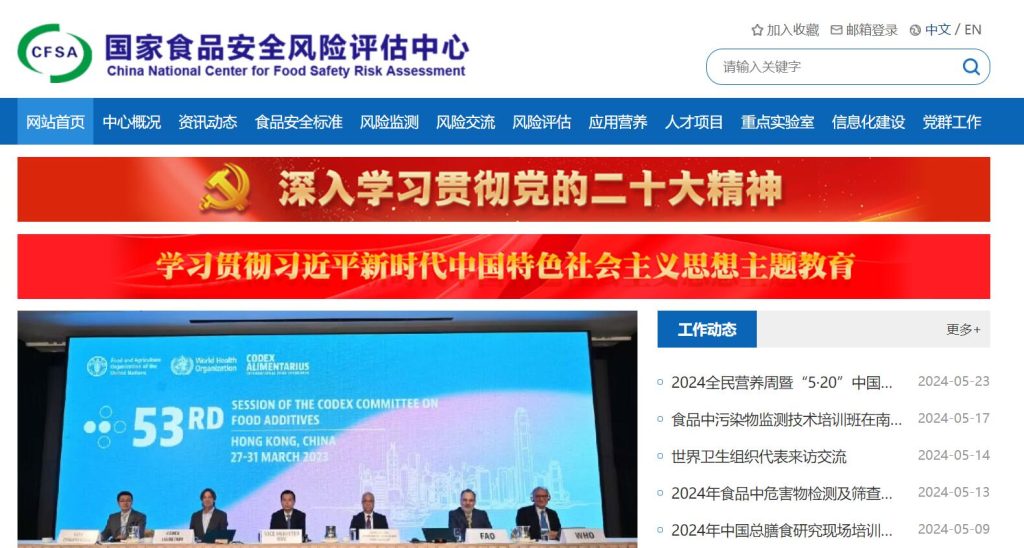
Role of CFSA in China
Establishment of the CFSA under the instructions and guidance of the Chinese government comes to mean that this is the only national food safety risk assessment technical organization in China. The group operates as a very vital body under the right leadership of the Party Group of the National Health Commission with the support and guidance of the relevant departments and bureaus. The leadership group of the Center has united and led all cadres and workers to carry out their duties and responsibilities, pioneering and struggling, developing during formation and innovating during development. The CFSA fully implements its four major core businesses: food safety risk monitoring, risk assessment, standards management, and the National Nutrition Program.
The Regulatory Framework
The CFSA operates under a well-defined regulatory framework that is constituted by the relevant laws, standards, and regulations with its main objective being to assure safety and quality of food products. The core of the legislative framework supporting the CFSA’s work is the Food Safety Law of the People’s Republic of China, first adopted in 2009 and amended to deal with the emerging challenges and integrate international best practices.
Food Safety Law
The Food Safety Law of China lays down the standards that food producers, processors, and distributors have to follow. It mandates that food products undergo strict testing and inspection, intense labeling, and tracing mechanisms in order to map back the origin of food products to the time they reach the consumer. The law further delineates penalties for offenders that include fines, suspension of operations, and criminal liability in the event of severe offenses.
Functions and Responsibilities
CFSA’s functions and responsibilities are wide and encompass very many elements of food safety management. These responsibilities are inclusive of the following:
- Risk Monitoring: CFSA undertakes to monitor food safety risks of the food supply chain on a regular basis. It collects data on potential hazards and determines trends that may affect food safety.
- Risk Assessment: It provides scientific risk assessment of potential food safety hazards and develops strategies for risk alleviation. CFSA collaborates with other research institutions, industry experts, and international organizations.
- Management of Standards: CFSA forms and manages food safety standards. These are inclusive of the setting of maximum residue limits for pesticides and veterinary drugs, food additive standards, and microbiological criteria for food commodities.
- National Nutrition Program: CFSA plays a tremendous part in the development, drafting, and launch of the National Nutrition Program. The program is aimed at improving the population’s nutritional status by way of advocating a balanced diet and promoting knowledge about nutrition.
Impact on the Food Industry
The regulatory measures by CFSA have had very many impacts on the food industry in China. Through setting very stringent standards for the safety of food, the agency helps build confidence in the consumer that the food products are safe for consumption. This makes Chinese food products very competitive on the local and international markets.
Improvement in Food Safety
One of the principal effects of regulation by CFSA is the improvement of food safety in China. Their stringent procedure of inspection and testing erases and checks instances of food safety hazard before the final consumption stage. This has, in turn, led to a reduced incident of food-borne diseases and consequently, general improvement in public health.
Compliance
The enforcement measures by CFSA have also helped to compel great compliance to safety regulations by food processors and manufacturers. The threat of penalties and legal action acts as a very good deterrent against non-compliance; businesses try to be safer and invest in the food safety management systems.
Supporting Innovation
High standards of food safety as provided by the CFSA encourage innovation within the industry. Companies are thus encouraged to develop new technologies and processes that enhance food safety and quality of foods. This includes advancements in food testing methods, traceability systems, and food processing technologies.
Challenges and Future Directions
Despite all its achievements, the CFSA faces several challenges along its way of ensuring food safety of China. These include: complexity of food supply chains, the emergence of new food safety risks, and the need for continuous improvement in the regulatory frameworks.
Supply Chain Complexity
Dealing with the complexity of the food supply chain in China presents one of the most significant challenges to be faced in the management of food safety. The kind of food industry that the CFSA has is big and diverse, ranging from small-scale producers to large multinational corporations, covering everything in between. Strong regulatory mechanisms and effective enforcement strategies are required to ensure compliance across such a wide spectrum.
Emerging Risks
The emerging risks relating to food safety, particularly in the area of antimicrobial resistance and the use of novel food ingredients, demand continuous research and, if needed, adaption of regulatory approaches. The CFSA should also be proactive in investing in scientific research programs and collaborate with international partners in developing effective management strategies based on the best available scientific knowledge.
Regulatory Evolution
As the food industry advances, similar efforts must be directed towards the development of regulatory frameworks. The CFSA must continue to assess and revise its regulations to address emerging challenges and apply advances in food safety science and technology. All this needs to be done with the spirit of adopting international standards and best practices so that the food safety regime of China remains attuned to global benchmarks.
Conclusion
Since its inception, CFSA, alternatively known as the State Risk Assessment Center for Food Safety, is emerging as a critical player in the entire food regulatory framework for ensuring food safety and food quality in China. Its detailed and elaborate regulatory framework, clinical with stringent verification and testing protocols, and facing a very high sense of consumer awareness, made a huge difference in food safety, and in turn, public health. But, still being a very difficult task, it requires further improvement and innovation in regulatory approach.
At the same time, professional guidance and support are necessary for enterprises to circumvent the complexities of the system of food safety regulations in China. That is where we come in. Our company provides professional consulting services in the field of CFSA registration to support enterprises in performing the task of registration without any hassle. We are committed to making certain that your products comply with high standards of safety and quality. With general knowledge of the Chinese food safety regulatory system under our belts and many years of experience, you can rely on us to help you achieve this. Reach out to [HongMaoKang] right now to find out more about how our services can help you move through this regulatory landscape effectively to ensure the safety of your products.
